6-Day Ayahuasca Retreat in Porto Seguro: The Ultimate Reset
Porto Seguro carries a different kind of quiet. The coast doesn’t ask for urgency; it offers rhythm—warm air, open horizon, and evenings that feel made for exhaling. In a setting like this, the body...

Porto Seguro carries a different kind of quiet. The coast doesn’t ask for urgency; it offers rhythm—warm air, open horizon, and evenings that feel made for exhaling. In a setting like this, the body often softens first. And when the body softens, inner work becomes more honest, more workable, and less performative.
Table Of Content
- The overall feel
- Why coastal calm matters for plant medicine work
- Sacred ceremony: what “held” can actually mean
- The role of yoga and meditation
- The 6-day arc: a realistic container for change
- Day 1: Arrival, orientation, and grounding
- Days 2–5: Ceremony, practice, and integration
- Day 6: Integration and re-entry planning
- Gentle transformation: what it can look like
- Who this retreat is best for
- Final take
- FAQ
- Is this suitable for first-timers?
- Will it be intense?
- Why include yoga and meditation?
- What helps the healing last after the retreat?
This ayahuasca retreat in Porto Seguro, Bahia, is framed as a six-day immersion that blends sacred ceremony with yoga and meditation, held in a coastal environment that supports steadiness. The promise isn’t intensity for its own sake. It’s a gentle transformation: clear structure, supportive practices, and enough space for integration so insights can actually land.
Affiliate disclosure: UltimateRetreatGuide.com may earn a commission if you book through links on this page—at no extra cost to you.
The overall feel
Reverent, calm, and grounded. The retreat’s tone leans toward safety and pacing—less “chase the breakthrough,” more “let the truth unfold.” Yoga and meditation aren’t add-ons here; they function as anchors, helping participants return to the body and regulate between deeper experiences.
Why coastal calm matters for plant medicine work
Plant medicine work can be powerful, and power needs a stable container. A coastal setting like Porto Seguro can support that stability in subtle, practical ways.
Coastal calm often supports: – Nervous-system downshifting through steady sensory input (waves, open space) – Better sleep and recovery between ceremonies – Emotional processing with less daily-life stimulation – Integration time so experiences don’t stay “in the head”
When the environment helps the body feel safer, the inner work often becomes clearer—less chaotic, more coherent.
Sacred ceremony: what “held” can actually mean
A retreat that emphasizes sacred ceremony typically signals structure: preparation, respectful ritual, and guidance that prioritizes responsibility.
In practice, a well-held ceremonial container often includes: – Clear expectations and pacing (so participants aren’t pushed past capacity) – Support that encourages humility and self-responsibility – Space for rest and reflection (not constant stimulation) – Integration guidance to translate experience into daily life
That structure can be the difference between a meaningful week and an overwhelming one.
The role of yoga and meditation
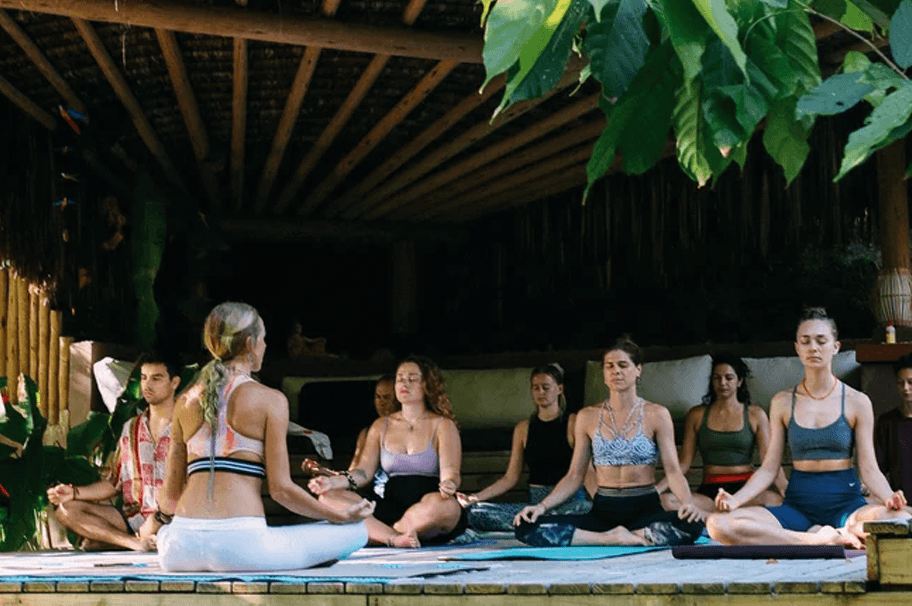
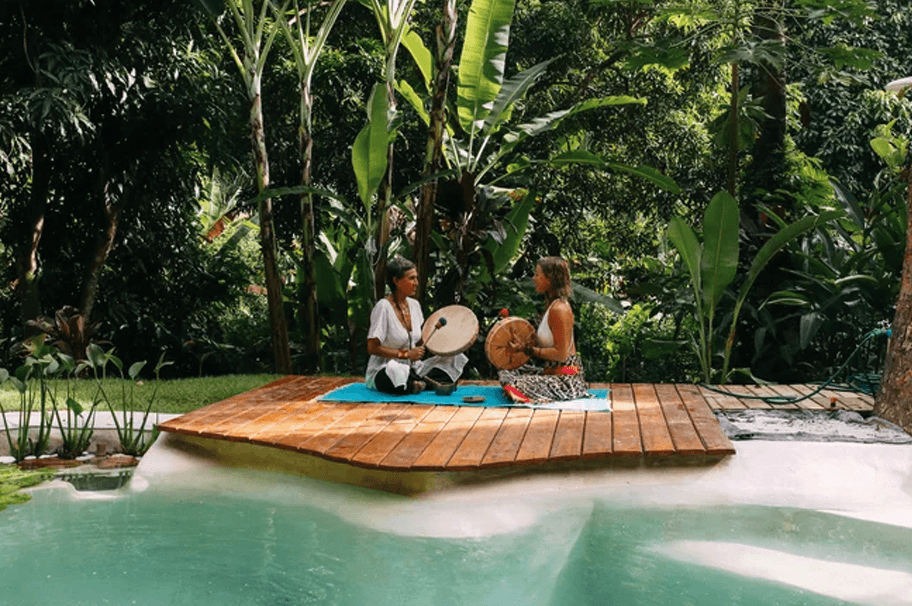
In a retreat like this, yoga and meditation are more than wellness activities. They’re integration tools.
They commonly help participants: – Return to the body after intense emotional material – Build tolerance for sensation without panic – Strengthen inner witnessing (less fusion with thoughts) – Create a calm baseline that supports clearer choices
For many people, these practices become the “bridge” that makes transformation gentle rather than destabilizing.
The 6-day arc: a realistic container for change
Six days is long enough to settle, open, and integrate—especially when the retreat is structured with pacing.
Day 1: Arrival, orientation, and grounding
The first day is often about landing. Many people arrive carrying stress, grief, or a nervous system that’s been running hot for months. This phase typically focuses on safety: intentions, boundaries, and the practical rhythm of the week.
A calm start matters. It sets the tone that the retreat is not a race.
Days 2–5: Ceremony, practice, and integration
This is the heart of the retreat. The work often moves in waves: ceremony, rest, embodied practice, reflection, and gentle re-entry.
Participants commonly experience layers such as: – Emotional truth: feelings that have been postponed becoming visible – Somatic release: the body letting go of long-held tension and protection – Relational insight: seeing patterns, roles, and defenses with more compassion – Self-forgiveness and clarity: a quieter strength returning
Yoga and meditation support these days by offering a steady “home base.” When emotions intensify, the body has somewhere to return.
Between sessions, the coastal environment supports integration: walking, breathing, quiet meals, and unstructured time that allows the nervous system to digest what’s been touched.
Day 6: Integration and re-entry planning
The final day is where gentle transformation becomes lasting transformation. Insights are translated into practical commitments: nervous-system care, boundaries, daily practices, and realistic next steps.
This is often where the retreat’s value becomes most tangible—because the goal isn’t to leave “high.” It’s to leave steadily.
Gentle transformation: what it can look like
Not everyone leaves with fireworks. Many leave with something more sustainable: a calmer baseline and clearer choices.
Common outcomes after a well-paced week include: – More emotional honesty without overwhelm – Reduced internal urgency and self-judgment – Clearer boundaries and cleaner relationships – Better sleep and a steadier nervous system – A sense of meaning that feels grounded, not manic
In daily life, that can look like responding instead of reacting—and choosing what supports health, not old patterns.
Who this retreat is best for
This retreat is a strong fit for people who: – Want a structured, respectful ceremonial container – Prefer coastal calm and simplicity over heavy stimulation – Value yoga and meditation as integration tools – Are seeking healing that continues after the retreat, not just peak experiences
It can be especially supportive during life transitions, burnout recovery, grief, or long-held emotional patterns—when approached with humility and readiness.
Final take
This ayahuasca retreat in Porto Seguro, Bahia, stands out for its steady, coastal tone: sacred ceremony held with respect, supported by yoga and meditation, and paced for integration. For those seeking plant medicine work that feels grounded—where transformation is gentle enough to last—this six-day container in Porto Seguro can be a meaningful turning point.
Ready to explore a 6-day ayahuasca retreat in Porto Seguro, Bahia—held with structure, coastal calm, and real integration support? Check dates and inclusions here.
FAQ
Is this suitable for first-timers?
It can be, especially with clear guidance and a steady structure. First-timers tend to do best when they arrive prepared and willing to follow the container.
Will it be intense?
Ayahuasca can be intense by nature. “Gentle transformation” usually refers to pacing, support, and integration—not a guarantee of comfort.
Why include yoga and meditation?
They help regulate the nervous system, build embodied awareness, and support integration between deeper experiences.
What helps the healing last after the retreat?
Integration: rest, daily grounding practices, clear boundaries, and realistic commitments that protect the new baseline.