Detox vs. Cleanse: What’s the Difference, and Which Do You Need?
Article This article contains affiliate links. If you book through our links, we may earn a commission at no extra cost to you. Walk into any health food store or scroll through wellness Instagram,...

Article
This article contains affiliate links. If you book through our links, we may earn a commission at no extra cost to you.
Table Of Content
- Article
- Detox vs Cleanse: The Core Difference
- What is a detox?
- What is a Cleanse?
- Quick Comparison: Detox vs Cleanse
- Types of Detox Programs
- Juice Detox
- Liver Detox
- Heavy Metal Detox
- Panchakarma
- Digital Detox
- Types of Cleanse Programs
- Juice Cleanse
- Colon Cleanse
- Whole Food Cleanse
- Elimination Cleanse
- Which Do You Need?
- Choose a cleanse if
- Choose a detox if
- The Truth About Detox and Cleanse Claims
- How to Approach Detox and Cleanse Safely
- Frequently Asked Questions
- The Bottom Line
Walk into any health food store or scroll through wellness Instagram, and you’ll see “detox” and “cleanse” used interchangeably. Detox teas. Cleansing juices. Detox diets. Cleanse programs.
But detox vs. cleanse—are they actually the same thing? Not quite.
Understanding the difference helps you choose the right approach for your goals, avoid marketing hype, and set realistic expectations for what these practices can (and can’t) do.
Detox vs Cleanse: The Core Difference
What is a detox?
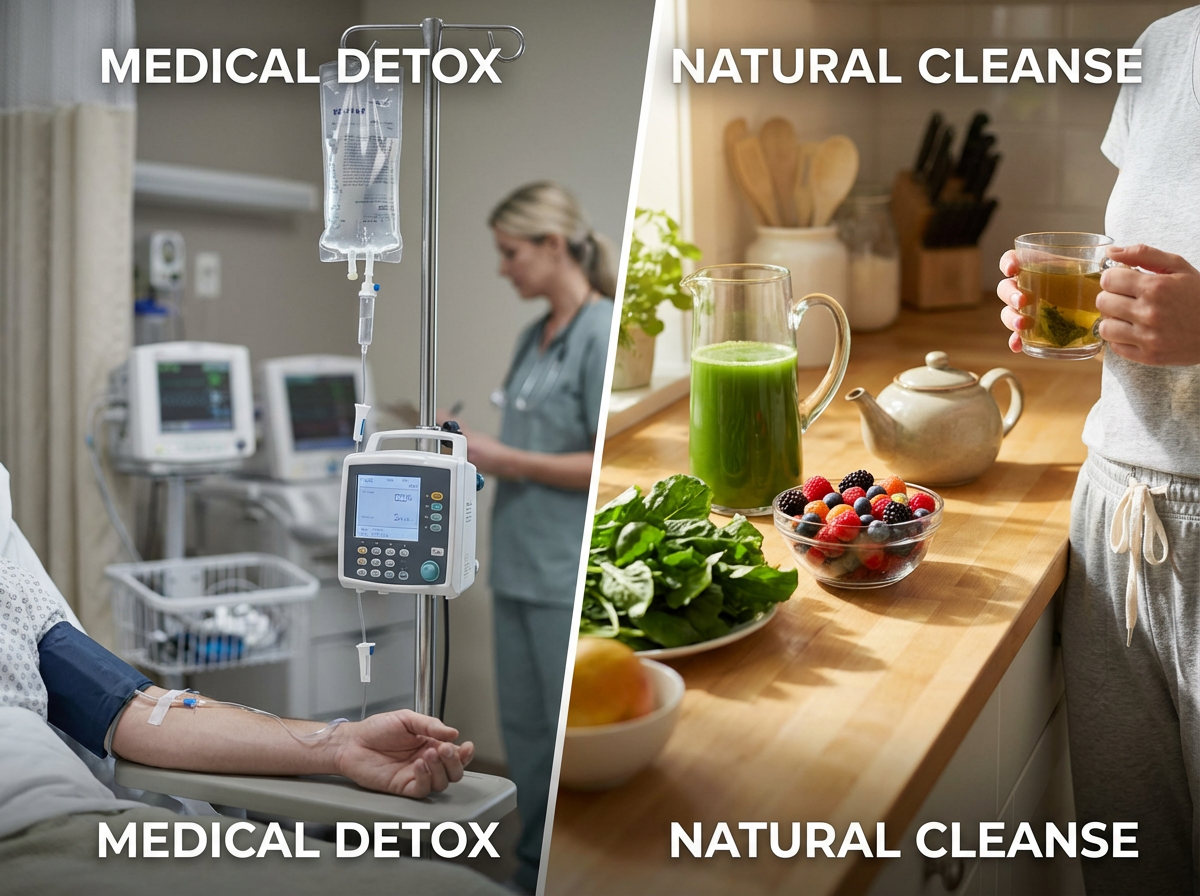
Detoxification refers to the process of removing toxic substances from the body. In medical terms, it specifically means eliminating drugs, alcohol, or poisons—often in clinical settings.
In wellness contexts, “detox” typically means supporting the body’s natural detoxification organs (liver, kidneys, lymphatic system, skin) to process and eliminate accumulated toxins more efficiently.
Key characteristics of detox:
- Focuses on toxin elimination at a cellular level
- Often involves fasting or significant dietary restriction
- May include specific protocols (sauna, supplements, treatments)
- Typically more intensive and structured
- Can cause detox symptoms (headaches, fatigue, skin breakouts)
What is a Cleanse?
“Cleansing” generally refers to cleaning out the digestive system—particularly the colon and intestines. It’s about removing waste buildup and giving the digestive system a rest.
Key characteristics of a cleanse:
- Focuses on the digestive tract
- Usually involves liquid diets, juices, or specific foods
- Shorter duration (3-7 days typically)
- Gentler than intensive detox protocols
- Aims to reset eating habits and reduce bloating
Quick Comparison: Detox vs Cleanse
| Aspect | Detox | Cleanse |
|---|---|---|
| Primary focus | Whole body, cellular level | Digestive system |
| Duration | 7-30 days | 1-7 days |
| Intensity | More intensive | Gentler |
| Methods | Fasting, supplements, treatments, sauna | Juices, specific foods, fiber |
| Supervision | Often recommended | Usually self-guided |
| Detox symptoms | Common | Mild or none |
| Examples | Panchakarma, medical detox, liver detox | Juice cleanse, colon cleanse, whole food cleanse |
Types of Detox Programs
Juice Detox
Consuming only fresh-pressed juices for several days. Provides nutrients while giving digestion a rest. Straddles the line between detox and cleanse.
Liver Detox
Specific protocols targeting liver function with herbs (milk thistle, dandelion), foods (beets, leafy greens), and sometimes supplements.
Heavy Metal Detox
Protocols designed to remove accumulated heavy metals (lead, mercury, aluminum) using chelation therapy or specific supplements. Should be medically supervised.
Panchakarma
Ayurveda’s comprehensive detoxification system involves five therapeutic procedures. The most thorough traditional detox, requiring 7-28 days and professional supervision.
Learn more: What is Panchakarma? →
Digital Detox
Not physical, but increasingly relevant—abstaining from screens and technology to reset mental clarity and reduce stress.
Types of Cleanse Programs
Juice Cleanse
3-7 days of fresh juices only. Popular, accessible, and relatively gentle.
Colon Cleanse
Focuses specifically on clearing the colon through fiber supplements, enemas, or colonic irrigation.
Whole Food Cleanse
Eliminates processed foods, sugar, alcohol, and caffeine while eating clean whole foods. Less restrictive, more sustainable.
Elimination Cleanse
Removes potential allergens and inflammatory foods (gluten, dairy, soy) to identify sensitivities.
Which Do You Need?
Choose a cleanse if:
- You want a gentle reset after overindulgence
- You’re new to wellness practices
- You have 3-7 days available
- You want to jumpstart healthier eating habits
- You’re experiencing bloating or sluggish digestion
Choose a detox if:
- You’re dealing with chronic fatigue, brain fog, or persistent health issues
- You’ve been exposed to environmental toxins
- You want deeper, systemic cleansing
- You have 1-4 weeks available
- You’re ready for a more intensive commitment
- You can access professional guidance

The Truth About Detox and Cleanse Claims
Let’s be honest: your body detoxifies itself constantly. Your liver, kidneys, lungs, skin, and lymphatic system work 24/7 to process and eliminate toxins.
So do you need a detox or cleanse? Not strictly.
But here’s what these practices can legitimately offer:
- A reset from processed foods, sugar, alcohol, and caffeine
- Improved awareness of how different foods affect you
- A break for your digestive system
- Support for your body’s natural detox processes
- A catalyst for lasting lifestyle changes
What they can’t do: magically undo years of poor habits in a weekend, cure diseases, or replace medical treatment.
How to Approach Detox and Cleanse Safely
- Start gentle—A whole food cleanse before jumping into intensive detox
- Stay hydrated—essential for any cleansing process
- Listen to your body—some discomfort is normal; severe symptoms are not
- Seek guidance—especially for longer or more intensive protocols
- Plan your re-entry – How you break a cleanse matters as much as the cleanse itself
- Be realistic—sustainable habits beat dramatic short-term measures
Frequently Asked Questions
Can I exercise during a detox or cleanse? Gentle movement (walking, yoga, stretching) is usually fine. Avoid intense workouts—your body needs energy for cleansing, not performance.
Will I lose weight? Likely yes, temporarily. Much of it is water weight and will return. Focus on how you feel, not the scale.
How often should I detox or cleanse? Seasonal cleanses (2-4 times yearly) work for most people. Intensive detox programs like Panchakarma are typically done 1-2 times per year.
Are detox teas and supplements worth it? Some herbs genuinely support liver function (milk thistle, dandelion). Many “detox” products are marketing hype. Research ingredients before buying.
The Bottom Line
Detox and cleanse aren’t the same—detox goes deeper and longer, while cleansing focuses on the digestive system with gentler, shorter protocols.
Neither is magic. Both can be valuable tools when approached realistically and safely.
The best “detox” is ultimately a lifestyle: whole foods, adequate water, regular movement, quality sleep, and minimal processed junk. Periodic cleanses and detox programs can support that foundation—but they can’t replace it.
Ready to experience a guided detox retreat?
Browse Detox Retreats Worldwide → — BOOK NOW!